Bicycle & Micromobility Safety



Bicycling Safely in Utah:
Rules of the Road
Bicycles are a great way to get around Utah! Understanding the rules of the road keeps everyone safe. In Utah, your bicycle is considered a vehicle, which means you share responsibilities with motorists. This includes electric-assisted bicycles and any wheeled vehicle propelled by human power with wheels 14 inches or greater in diameter.
Bicycle and micromobility travel is continuing to increase. Emerging modes of micromobility, such as e-bikes, e-scooters, electric-powered skateboards, and monowheels, pose unique opportunities and challenges for safety, infrastructure, education, and enforcement. Many cities and towns across the state lack adequate infrastructure to support the growing number of users. Inconsistent legislation and enforcement lead to confusion for riders and drivers. Additionally, insufficient rider education and rider safety lead to unsafe situations for all users.
Your Rights and Responsibilities as a Bicyclist
Obeying Traffic Laws
- Always obey traffic signals and traffic control devices.
- Stop signs may be treated as yield signs (Utah Code 41-6a-1105). This means you must slow down and yield to any vehicles or pedestrians, proceeding only when it is safe and does not impede traffic.
Lane Positioning
- Ride in the same direction as traffic.
- Ride as far to the right as possible, unless:
- You are passing another vehicle.
- You are making a left turn.
- You are going straight through an intersection.
- You need to avoid a hazard in the road.
- The lane is too narrow to safely share with a motor vehicle.
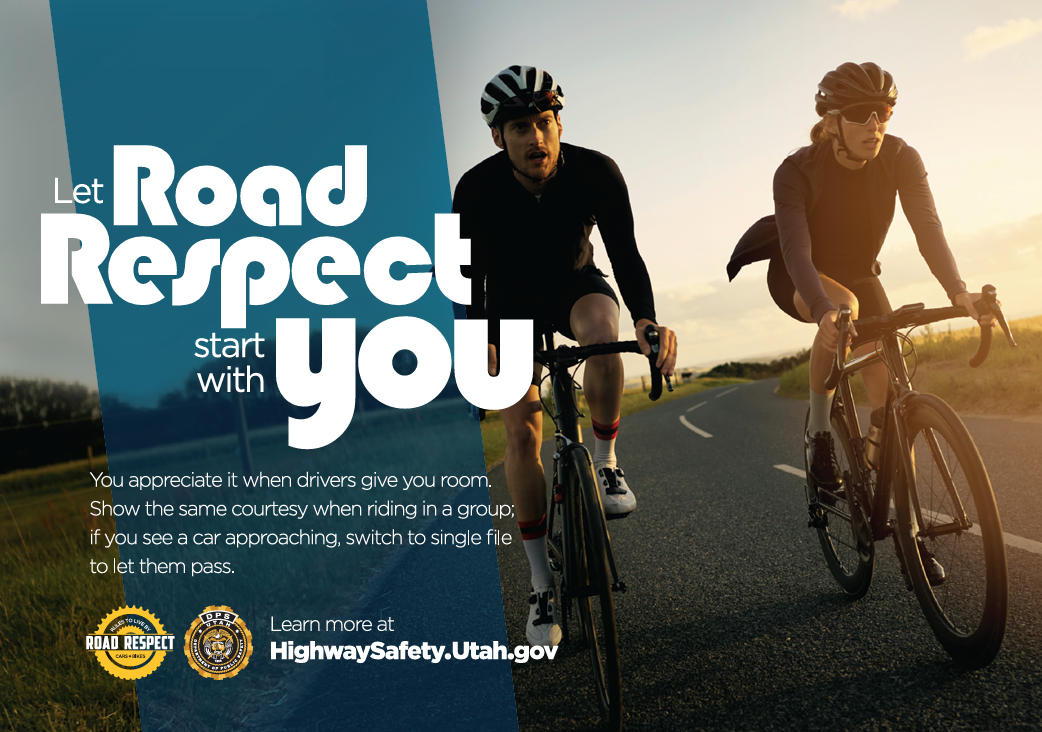
- You may ride no more than **two abreast** (side-by-side), and only if you do not impede traffic.
Signaling Turns and Stops
Use the following hand signals at least 3 seconds in advance of your turn or stop. Once you are stopped in a designated turn lane, you do not need to signal again.

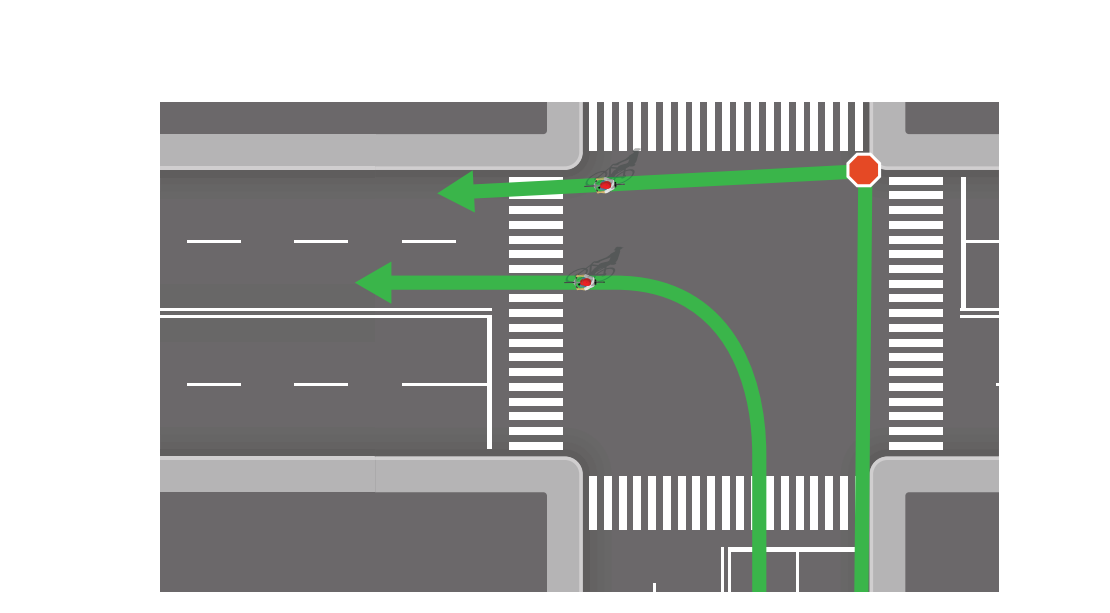
Making Left Turns (Two Options)
- Like a Motor Vehicle: Use the designated left-turn lane.
- Two-Stage Turn:*Stay on the right side of the road, ride straight through the intersection and stop. When safe and legal, cross in the new direction, staying on the right side of the road.
Navigating Red Lights
If you are 16 years or older, and you have stopped and waited at a red signal or arrow for at least 90 seconds, you may cautiously enter the intersection if no other vehicle or pedestrian has the right-of-way.
Passing Other Vehicles
You may pass other vehicles on the right by driving off the main traveled portion of the road (e.g., on a paved shoulder).
Understanding Sharrows
A "sharrow" is a pavement marking (a bicycle symbol with chevrons) that indicates to all roadway users that **cars and bikes can share the lane**.
Bicycling on Sidewalks, Paths, Trails, and Crosswalks
- Age Restriction: Bicyclists under 18 years old have the right to use sidewalks. Those 18 and older may be prohibited by local ordinances – check local rules.
- Reasonable Speed: Always maintain a speed that is reasonable and safe for the circumstances, especially around pedestrians.
- Yield to Pedestrians: You must yield to pedestrians. When passing them, audibly signal your presence with your voice or a bell.
- Bike Lanes/Paths: You are not required to use designated bike lanes or paths unless specifically directed by signs or laws.
- Pedestrian Rights & Duties: When using a sidewalk, path, trail, or crosswalk, bicyclists have all the rights and duties of a pedestrian.
- Be Cautious at Driveways/Sidewalks: Motorists may not see you when entering or exiting driveways or crossing sidewalks.
- Make Eye Contact: Bicyclists and motorists should actively check for each other and make eye contact before proceeding to ensure mutual awareness.
You might also like...
For more information
Utah's Bicycle & Micromobility Programs
Katherine Hemphill
801-386-2911
[email protected]